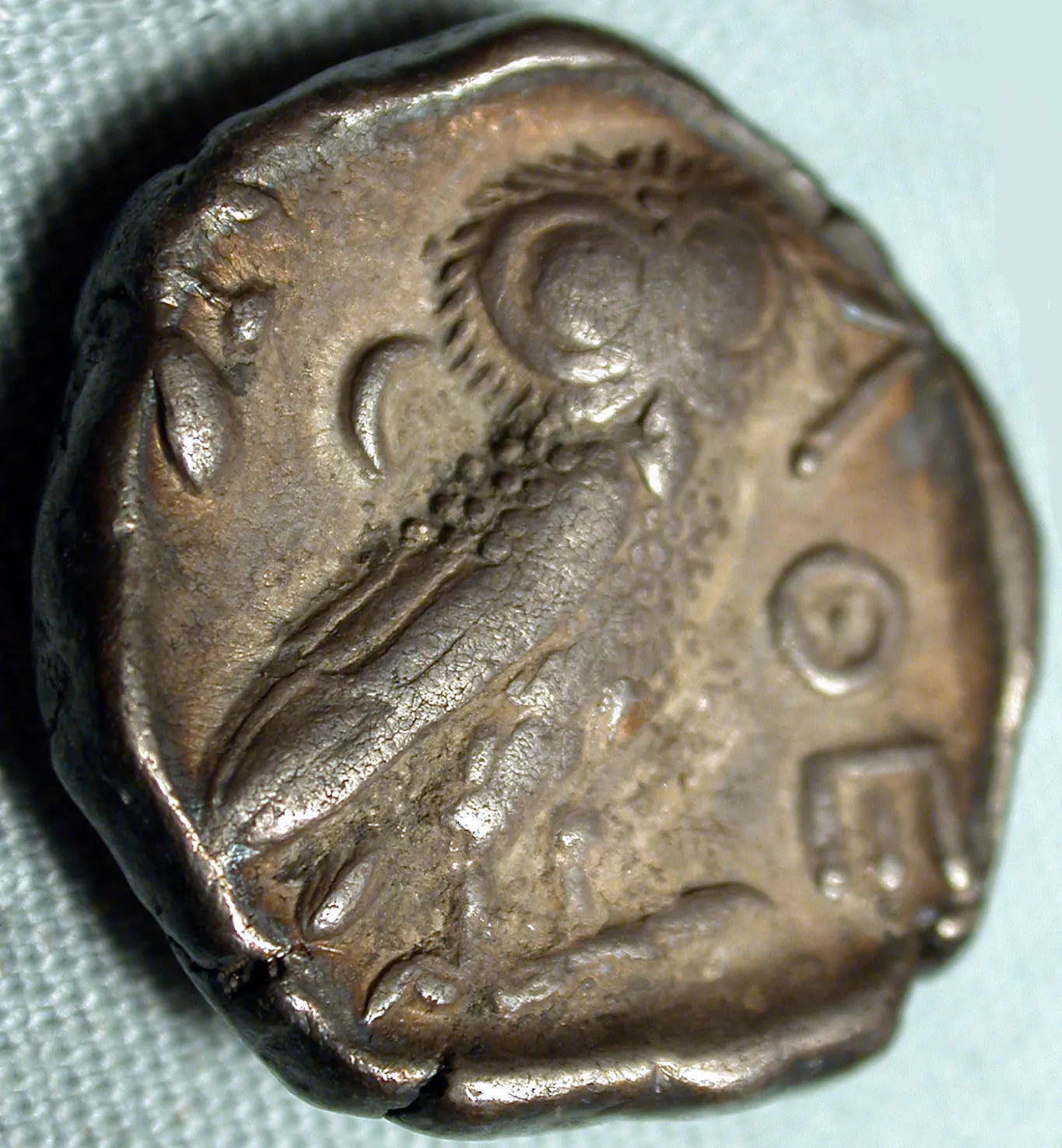
A coin is a small, dense object with an unusual amount going on at once: a government's authority, a sculptor's or engraver's design work, a specific moment in a mint's technical history, and in older examples a record of trade, conquest or commemoration that survives nowhere else in quite the same physical form. This section reads coins and paper currency primarily as historical and artistic objects rather than as a stand-in for the metal they happen to be struck from. Bullion content is a real and relevant fact about many coins, and this section does not pretend otherwise, but it is one fact among several, not the organizing one.
That distinction matters because the two framings lead a collector to look at completely different things. Someone thinking about melt value checks a scale and a metal-content chart and stops there. Someone thinking about a coin as a collectible checks the mint mark, the strike quality, the surface condition under magnification, the design's attribution to a known engraver, and how many other examples of that date and mint are known to survive. Two coins can contain the identical weight of silver and be worth wildly different amounts, because everything that separates them lives in that second list, not the first.
Design is where this section starts, because it is the part most often skipped over. A coin's obverse and reverse are miniature relief sculpture, planned and modeled the same way a medal or a bas-relief panel is planned and modeled, then transferred to hardened steel dies through a process that has changed enormously since hand-engraving was the only option. Many coin designs carry a named artist's credit, sometimes as initials worked into the design itself, and that rewards the same kind of looking a print or a small bronze rewards. The article on how a coin design is engraved works through that process in detail, and the article on coins as miniature works of art makes the broader case for judging a coin's design on its own artistic terms.
Ancient coinage adds a second layer entirely, because for large stretches of the ancient world a coin is not only an art object but close to a primary historical document. Portraits, titles, dates by regnal year, and civic or religious imagery struck onto ancient issues often supply information that no surviving text confirms independently, which is part of why museum collections and academic numismatics treat coin hoards as archaeological evidence in their own right rather than simply as old money. The article on ancient coins as historical objects and sculpture goes further into what that evidence actually looks like and where to check it.
None of this is a claim that value never matters, and this section does not pretend collectors are indifferent to it. Following the distinction the rest of the numismatic world already draws, what it insists on is that collectible value and bullion value are two separate questions with two separate answers, and that conflating them is how a genuinely scarce coin gets treated as scrap and a common one gets overpriced. The article on collectible value versus bullion value works through what actually moves a coin's price away from its metal content: rarity, condition graded on a recognized scale, demand within a specific collecting area, and documented history of the coin itself.
A large share of readers arrive at this section holding a collection someone else built, usually one they inherited rather than one they set out to build themselves. That situation has its own hazards, chief among them the impulse to clean coins that have gone dull or toned, which is close to always the wrong move and can permanently lower a coin's standing with collectors and graders. The article on what to do first with an inherited coin collection walks through the safer, slower first steps: what to leave alone, how to sort what you have into rough categories, and when the situation calls for a professional grader rather than a guess.
Read together, the five articles below cover a coin from four different directions: as a designed object, as a manufactured one, as a historical record, and as something a family might now be responsible for without having chosen to be. The Spoke Reviewtreats all four as part of the same subject, because in practice a collector or an heir usually needs to think about all four at once.