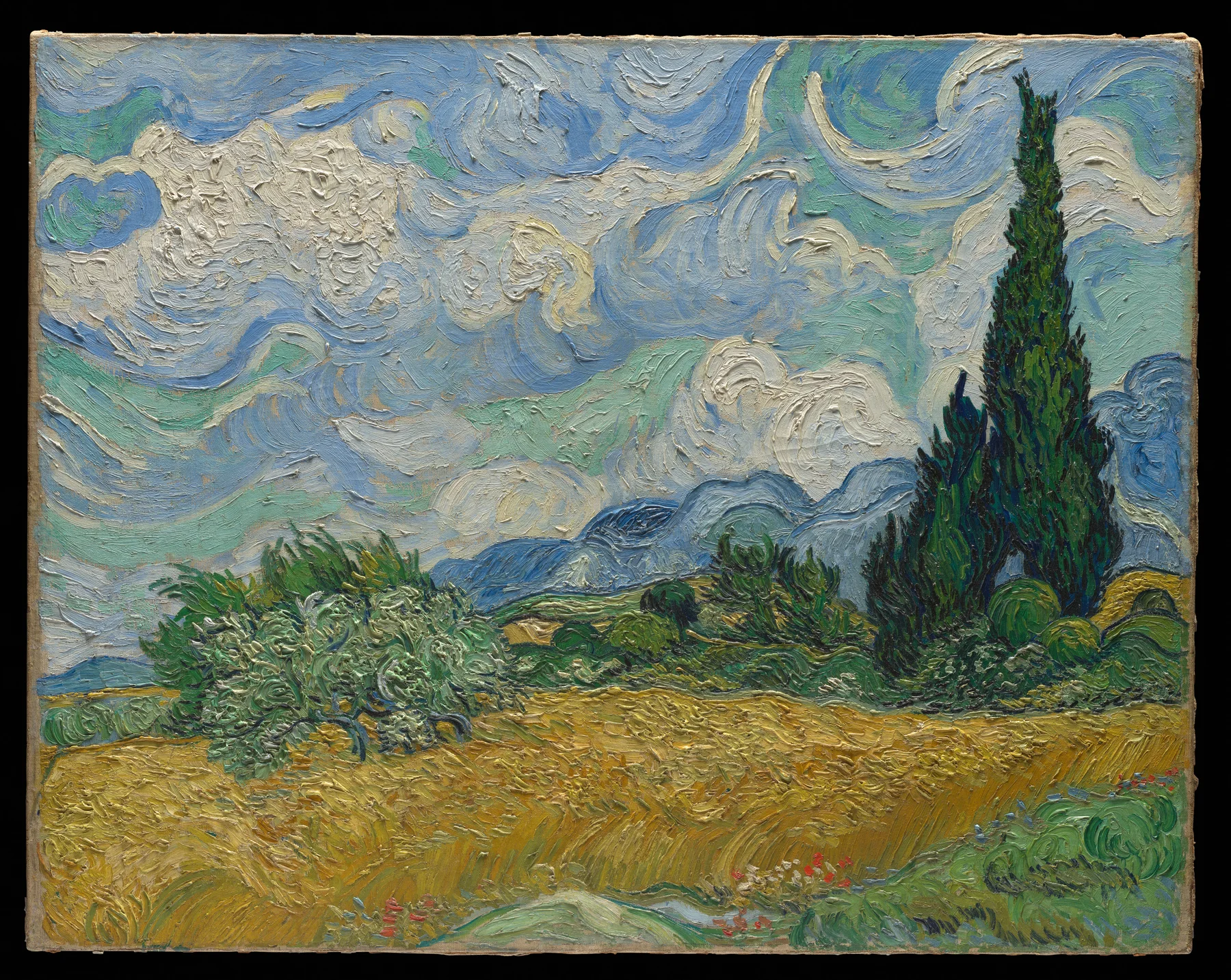
"Fine art" is the narrowest and, in practice, the most argued-over of this site's categories. Here it means work made primarily to be looked at rather than used: paintings in oil, acrylic, watercolor and pastel; works on paper, including hand-pulled prints such as etchings, lithographs and screenprints; photography, from a nineteenth-century albumen print to a numbered contemporary edition; and sculpture, in bronze, marble, wood, ceramic or mixed material. Even though both can be genuinely artful, a hand-carved cigar-store figure or a chased silver bowl sits closer to this site's Antiques coverage, because the working distinction this section draws is about the maker's stated intent and the market that grew up around that intent, not a judgment about which object is more skillfully made.
Each of those four media carries its own editioning and identification conventions, and knowing the difference matters before any question about value comes up. A painting is usually unique; only one version of it exists. A print is deliberately made in multiples, so the question shifts to whether it comes from a stated, numbered edition or an open, unlimited run. Photography sits in between: a nineteenth-century albumen or silver gelatin print is often a one-off or part of a small original run tied to a specific negative and darkroom session, while a contemporary photograph is frequently issued in a numbered edition the same way a print is, with its own artist's proofs set aside. Sculpture adds casting into the mix, since a bronze can be produced in a numbered edition from a single model, and a cast made decades after the sculptor's death under an estate's authorization is a different object from one cast during the artist's lifetime even when the two look identical side by side.
What makes fine art harder to evaluate than most collecting categories is that so much of its value depends on facts that are not visible in the object itself. A painting's surface shows brushwork, condition and, sometimes, a signature. It does not show who actually held the brush, whether the work was cataloged during the artist's lifetime, or whether a documented ownership history exists at all. Two canvases can look nearly identical and sell for wildly different sums because one carries a verifiable attribution and the other does not. That gap between what an object shows and what it is worth is the reason this section spends more time on evidence than on aesthetics. The evidence that carries the most weight is a signature, a provenance record and the market context around a maker.
Authorship is the first fact most people reach for, usually by looking for a signature. A signature is real evidence, but it is thin evidence on its own: it is small, it sits in a predictable place, and it is the single easiest part of a painting to imitate convincingly. The article below on identifying a signature covers how signatures, monograms and studio or foundry stamps actually function across painting, prints and sculpture, and where forgers most reliably slip up when they try to fake one.
Provenance carries more weight than a signature precisely because it is harder to fabricate convincingly. A believable ownership chain requires bills of sale, gallery labels, exhibition catalog entries or auction records that reference each other across years or decades, not a single mark added to a canvas in an afternoon. The provenance article walks through what counts as documentation, what a gap in that chain should make a buyer ask, and why a well-documented history changes both how confidently a work can be attributed and what it commands in a sale.
Not every piece of fine art is a major discovery, and treating every painting or print as though it might be one is not the point of this section. Most fine art in circulation is decorative, and that holds for most fine art found in an estate too: competently made, pleasant to live with, and without the edition scarcity, artist reputation or market demand that make a piece collectible in the narrower sense. The decorative-versus-collectible article sets out that distinction directly, because confusing "well made" with "collectible" is one of the most common and most costly misreadings a family makes when sorting an estate.
That last scenario is fine art turning up during an estate sort, and it gets its own article for a practical reason: the first week after a painting or sculpture surfaces is when the most preventable damage happens, usually from a well-meant attempt to clean, reframe or "freshen up" a piece before anyone qualified has looked at it. The four articles below are written to be read in any order, but together they cover the questions The Spoke Reviewhears most often about fine art: who made it, what supports that claim, what kind of object it actually is, and what to do with it in the first days after it is found.