"Antique" once had a fairly strict technical meaning: an object at least one hundred years old, a threshold U.S. customs law still uses when it decides what can cross a border duty free. In everyday collecting, the word has stretched well past that, and this section follows the broader, more useful usage. Here it covers the everyday material culture of earlier households and workplaces: silver, furniture, ceramics, glass, the wider category of decorative arts that does not fit neatly into any of those, and a genuinely overlooked category, vintage advertising and printed ephemera. What unites them is not a fixed age cutoff but a shared set of questions: who made this, how was it made, and what condition is it actually in.
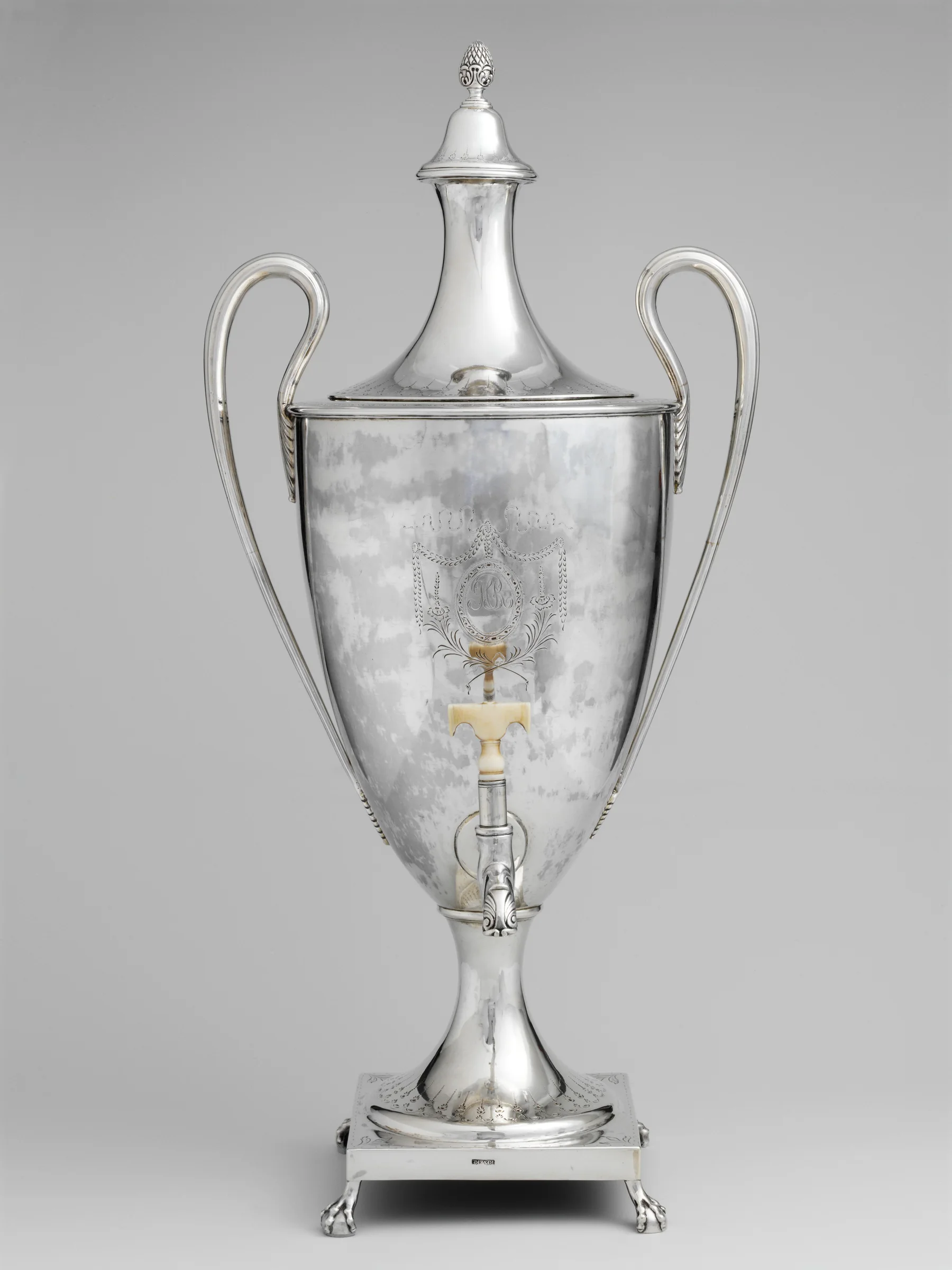
Silver is usually the first category a family encounters, because it tends to survive in quantity and shows up in nearly every estate. The essential split is between sterling and plate. Sterling is an alloy that is 92.5 percent pure silver by weight; plate is a cheaper base metal with a thin layer of silver applied over it, historically by fusing sheets together and later by electroplating from the 1840s onward. Both were marked by their makers, and both were marked differently depending on where and when they were produced. British silver carries a formal assay system with a town mark, a purity mark and a date letter struck by an independent assay office. American silver relied instead on manufacturers stamping their own claims, usually the word "sterling" or the number 925. No equivalent government assay stood behind those marks.
Furniture asks a different set of questions, because a chair or a chest carries most of its evidence in construction rather than in a stamped mark. Dovetail joints cut by hand are slightly irregular and vary in spacing; machine-cut dovetails are close to identical and evenly spaced, and that technology spread through American furniture making after the 1860s. Saw marks left inside a drawer bottom or on an unfinished back panel tell a similar story: a straight, circular saw mark points to steam or water-powered milling, while a curved, uneven mark points to a hand saw used before that machinery was common. None of this requires specialized equipment to see, only knowing where on a piece to look and what the marks actually mean once found.
Ceramics and glass share a family resemblance in how they are identified, even though the materials behave very differently. A ceramic body can be hard-paste porcelain, fired at a temperature high enough to vitrify the clay into something close to glass. It can also be a softer earthenware or stoneware fired at a lower heat and left more porous. A maker's mark on ceramics can be impressed into wet clay before firing, printed under the glaze in a stable ink, or painted over the glaze in a way that wears with handling, and each method says something different about how permanent and how trustworthy that mark actually is. Glass carries its own identification challenge: many art glass makers etched or acid-stamped a signature into the base, a mark thin enough that regrinding the foot to remove a chip can erase the maker's name along with the damage, and that repair otherwise looks completely reasonable.
Decorative arts is the catch-all this section uses for the objects that do not sit neatly inside silver, furniture, ceramics or glass on their own: clocks, lighting fixtures, textiles, small boxes, and metalwork in bronze or pewter. Many of these objects borrow identification methods from more than one of the other categories at once. A mantel clock's movement is marked like a piece of precision metalwork while its case is built and finished like a small piece of furniture. That is exactly why this section treats decorative arts as its own space rather than forcing every object into a single narrower category.
Vintage advertising and ephemera earns its own place here for a reason that has nothing to do with age and everything to do with survival. A lithographed tobacco tin, a porcelain-enamel trade sign, or a paper trade card handed out by a nineteenth-century merchant was never made to be kept. It was packaging, signage, or a throwaway promotional item, produced in large numbers and discarded once its immediate use was over. That production-versus-survival gap is wider here than almost anywhere else in this section, which is why condition and rarity can pull in genuinely different directions for a single object in a way that a well-made chair or a documented silver service usually does not.
The four articles below start from those shared questions and work through them in more detail: how to actually locate and read a mark once a piece is in hand, what separates sterling from plate and what condition issues matter most in silver specifically, why an object's age by itself tells a collector so little about what it is worth, and what makes vintage advertising and ephemera behave so differently from the categories around it. Read together, they cover most of what The Spoke Review hears from readers sorting through an antique for the first time.