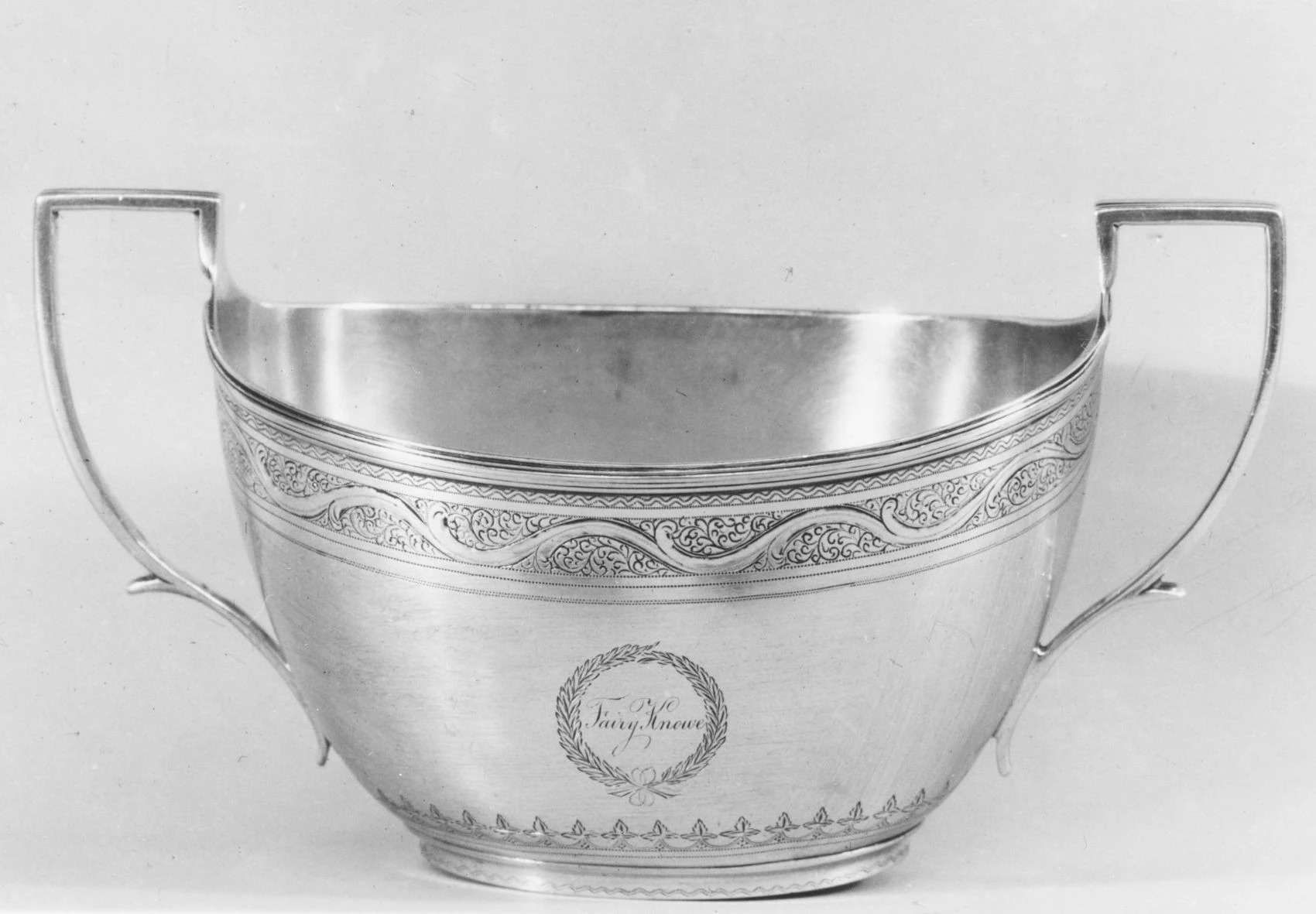
Silver turns up in almost every estate, in forms ranging from a single monogrammed spoon to a full tea and coffee service, and it is one of the few antique categories where the material itself carries an independent floor value alongside whatever collecting interest the piece might have. Working out which value applies and how much either one is affected by condition starts with a distinction more basic than either: whether a piece is solid silver at all, or only silver on the surface.
Sterling Versus Silverplate
Sterling silver is an alloy, not pure silver: 92.5 percent silver by weight, combined with copper or another metal to give it enough hardness to hold a shape and take everyday use. A sterling piece is silver all the way through, so wear, polishing, or even a light repair does not expose anything other than more of the same alloy underneath.
Silverplate is a different kind of object entirely: a base metal with a thin layer of real silver applied over it. That base is usually copper or a nickel-copper-zinc alloy known as nickel silver, despite containing no actual silver. The earliest form was Sheffield plate, which fused a sheet of silver to a sheet of copper by heat and pressure and rolled the combined sheet to the thickness needed; from the 1840s onward, electroplating largely replaced that method, depositing silver onto the base metal electrochemically instead. Victorian manufacturers marketed plating quality with terms like "quadruple plate," describing a heavier deposit of silver than a single or double plate, though the terms were never standardized across makers the way sterling's purity standard was. Either way, plate's silver layer is finite, and it wears through with enough use, exposing the base metal underneath in a way sterling never can.
Reading the Hallmark as Evidence
Hallmark systems are the primary way sterling and plate identify themselves, and reading them correctly is worth doing carefully rather than glancing at a single stamped word. British silver carries a full struck system, verified by an outside body rather than only claimed by the maker. Its marks include an assay office's own town mark and a date letter. American silver relies on a purity claim the maker stamped itself, "sterling" or "925," and no independent assay stands behind it. Silverplate carries its own separate marks entirely, often abbreviations like "EPNS" for electroplated nickel silver, and a buyer needs to recognize them specifically so as not to mistake a plated piece for solid silver at a glance. A closer look at how these marking systems actually work across silver, ceramics and glass is covered in this section's article on reading maker's marks and hallmarks.
Forms and Their Collecting Quirks
Flatware and hollowware behave differently as collecting categories, and each carries its own practical wrinkles. A flatware set is worth more complete and matching than broken into individual pieces. Monograms are common on nineteenth and early twentieth century flatware, and they can cut either way: some buyers want an unmonogrammed set for everyday use, while a set with a documented family monogram can carry added interest for a buyer researching that specific family or maker's output. Hollowware brings its own quirk: many candlesticks, compotes and weighted bases were deliberately filled with pitch, plaster or cement during manufacture, purely for stability, and that filler adds real weight that has nothing to do with silver content. A weighted piece should never be assessed for its metal content by weighing it whole. The fill inside adds weight that has nothing to do with silver, and separating the two accurately generally requires more than a kitchen scale.
Condition Factors That Matter
A few specific condition issues affect antique silver more than general wear does. Monogram removal is buffing an engraved initial off a piece to make it more sellable. It leaves a telltale thin or slightly wavy patch on the surface where metal was ground away, visible under raking light even when it has been polished smooth. "Bleeding" is the term for a coppery or yellowish base metal showing through at high-wear points such as spoon bowls or handle edges on silverplate specifically; it marks the plating layer as worn past a certain point, a condition problem sterling cannot have since the metal is uniform throughout. Other issues worth checking closely include dents and old repairs on hollowware, a replaced finial or lid that does not quite match a teapot's original casting, and hallmarks worn too shallow to read after generations of polishing, since each one can matter as much to a piece's standing as its maker or pattern does.
Caring for Silver Without Damaging It
Tarnish is the dark film that forms as silver reacts with sulfur compounds in the air. It looks like grime but is not simply dirt sitting on top of the metal, and treating it too aggressively can do more harm than the tarnish itself ever would. Repousse and chased pieces are decorated with raised or engraved patterns worked from the back or front of the metal, and they rely on tarnish collecting in their recesses to make that decoration read clearly; polishing a piece until every trace of tarnish disappears from those low points flattens the visual contrast the original maker built into the design. Abrasive polishes and mechanical buffing wheels remove a measurable layer of actual silver with each use, which is a real concern on plated pieces where that layer is thin to begin with, and even on sterling it slowly softens crisp detail on repousse or engraved work over repeated heavy cleanings. Used sparingly and only where tarnish has genuinely become disfiguring, a soft cloth and a mild, non-abrasive silver polish preserve both the metal and the detail far better than an aggressive once-a-year cleaning does.
Coins raise a structurally similar question in a different metal: a coin's face value and its collectible value can diverge from its raw silver or gold content in either direction, and collectible value versus bullion value works through that split in more depth. Back in this site's Antiques coverage, the same basic discipline applies to silver: identify whether the object is sterling or plate, read its marks as evidence rather than assumption, and weigh condition specifically rather than generally before deciding what a piece is worth pursuing further.