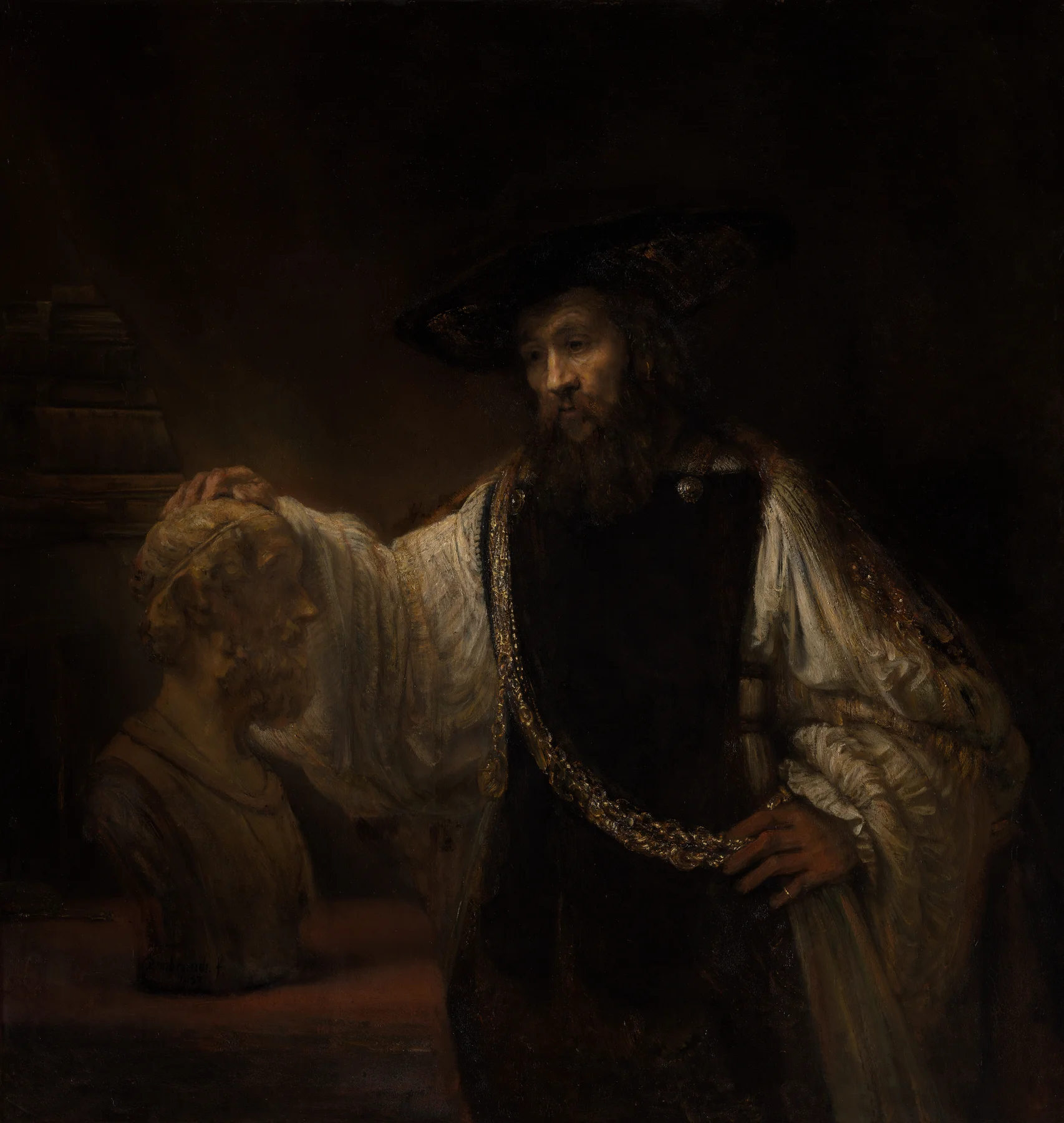
Provenance is the documented history of who has owned a work of art, where it has been shown, and how it has moved from one owner to the next. It is a paper trail, not an opinion, and that is exactly what makes it valuable: a claim that a painting is by a particular artist becomes much harder to dispute once it is backed by decades of records that all point the same direction, rather than resting on the painting's appearance and a signature alone.
What Actually Counts as Provenance
A useful provenance record is built from documents that were created for other reasons at the time and happen to name the work, which is part of why they carry weight: nobody involved was trying to prove anything about authenticity when a gallery typed up a sales receipt in 1962 or a museum printed an exhibition catalog in 1978. A gallery label pasted to the back of a canvas or its stretcher bar, a bill of sale naming the buyer and the work, an entry in an exhibition catalog with a lot or plate number, an inventory number from a private collection, and an auction house's own lot history and hammer price all function as links in the same chain. Each one is more convincing with the others than alone, because a single undated label proves little on its own, while a label, a catalog entry and a later auction record that all describe the same painting corroborate each other.
Family history and personal recollection matter to the people involved, but they are not provenance in the documentary sense unless they can be tied to something written down at the time: a letter, a photograph with a date, an estate inventory. "My grandmother always said this was painted by her uncle" is a lead worth investigating, not a fact a buyer or an appraiser can rely on by itself.
How Provenance Research Actually Gets Done
Tracing a painting's history usually starts with whatever is already attached to it. A gallery label on the stretcher bar or frame backing often includes a name and city that can be checked against that gallery's own surviving records if the gallery is still operating, or against library and museum special collections that hold dealer archives once a gallery has closed. An inventory number written in pencil on the back of a canvas means little on its own, but it can sometimes be matched against a published catalog or an auction house's own historical sale records, which many major houses maintain and make searchable going back decades. Exhibition history works the same way: a painting listed by title in a printed exhibition catalog is a checkable fact rather than a claim, because the catalog itself can be examined independently of whoever currently owns the work, and that is easiest when a museum library holds a copy.
None of this research requires specialized access that only a professional can obtain. A family working through inherited papers, old receipts, and correspondence mentioning a painting by name is doing exactly the same kind of work a professional researcher would start with, just on a smaller and more personal archive. What a specialist adds is knowing which archives and catalogs are likely to hold a match for a given period, artist or region, and how to interpret a partial or ambiguous record rather than treating it as either proof or nothing.
Why Gaps in the Chain Matter
A provenance record rarely covers every year of a painting's existence, and a gap is not automatically a red flag; older works can pass decades in a family's hands with nothing written down, because nobody thought a record would ever be needed. What matters more than a gap's length is whether the chain taken as a whole is internally consistent and whether the earliest documented owner and date are plausible for a work claiming that origin. A painting attributed to a well-known artist with no documented history earlier than a recent decade and no explanation for the absence is a different situation from one whose ownership can be traced back close to the artist's own lifetime with only a shorter, explainable gap in between.
Serious gaps are also where questions about a work's legitimate ownership history surface, including whether a painting could have passed through periods of confiscation or forced sale before reaching its current owner. Museums and major auction houses now routinely check disputed and wartime-era ownership claims against published research and loss registries before accepting a consignment, and a family that inherits an older European painting with an incomplete history is generally well served by having that history checked before a sale, not after one.
How Provenance Changes Both Credibility and Value
Provenance and authenticity are related but not identical questions. A strong provenance record supports an attribution; it does not replace connoisseurship or materials analysis where those are warranted, and a forged provenance record complete with fabricated labels and invented sale histories is itself a known category of art fraud. What a well-documented chain reliably does is reduce risk for a buyer, and reduced risk shows up directly in price. Take two otherwise comparable works by the same artist, one with a continuous, checkable ownership history and one with none. They will not command the same interest from serious buyers or the same result at auction. Provenance is, in a very literal sense, part of what a buyer is purchasing along with the object itself.
The same logic extends well past paintings. A coin's mint records, a piece of jewelry's original box and receipt, or a maker's documented sale ledger all serve the identical function for their respective categories, which how provenance changes a collectible's value covers across collecting categories more broadly. For a painting specifically, the practical takeaway covered throughout this site's Fine Art section is the same one that applies to any documentary evidence: gather what exists, keep it with the work rather than separately, and treat a gap in the record as a question to answer rather than a reason to assume the worst or to stop looking.