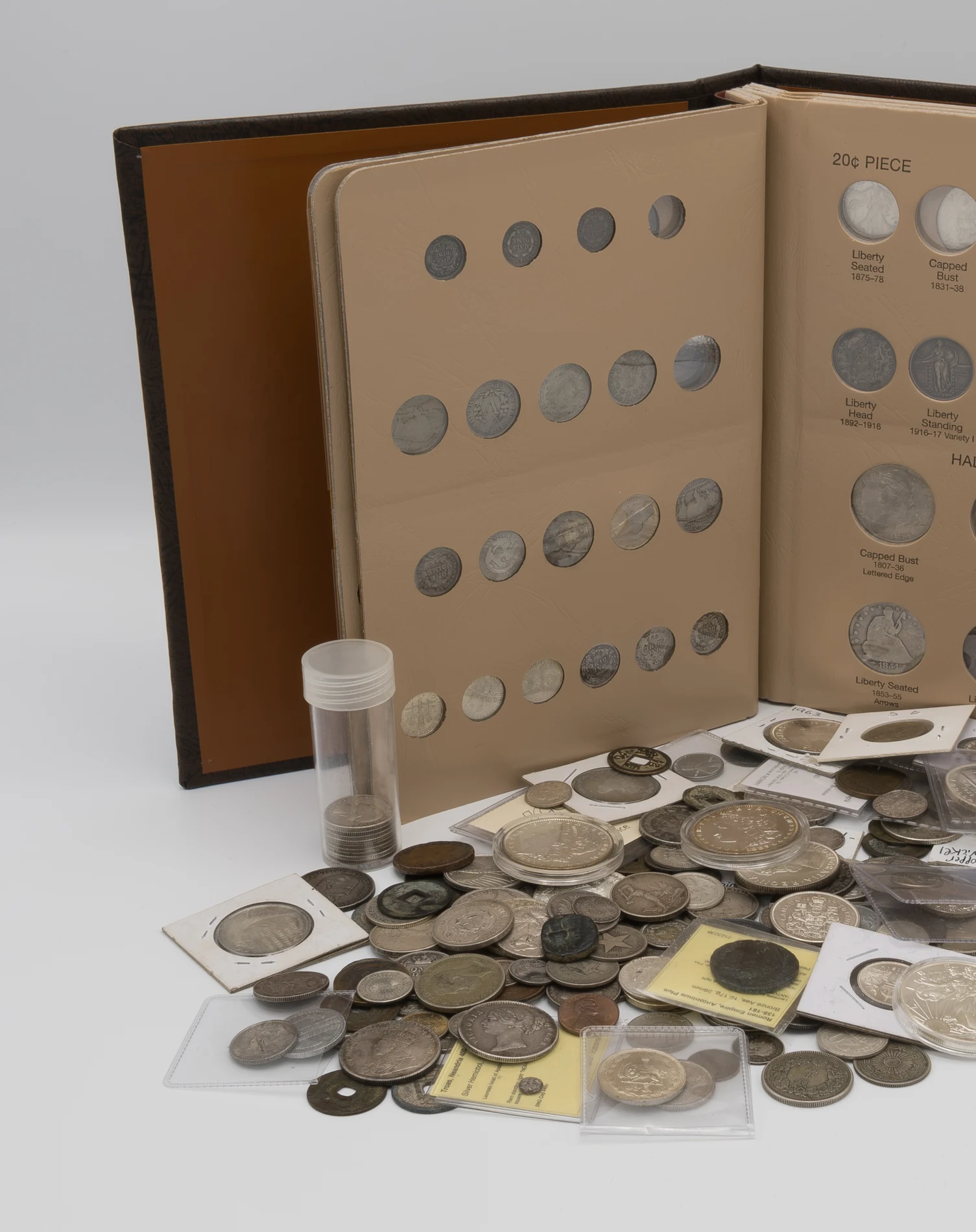
A coin collection built by someone else over decades rarely arrives with a clear inventory or any explanation of why particular coins were kept. It usually arrives as a box, an album, or a series of folders and holders in varying condition, sometimes labeled carefully and sometimes not labeled at all. The first few decisions made with that collection matter more than almost anything that follows, because several of the most common instincts cause damage that cannot be undone, cleaning coins chief among them.
Do Not Clean the Coins
This is the single most important instruction in this article, and it deserves to stand alone before anything else: do not clean inherited coins, under any circumstances, no matter how dull, toned or dirty they look. Toning is the color change many coins develop over decades from slow chemical reaction with the air and whatever they were stored in. It looks like tarnish or grime to an untrained eye, but collectors and graders often value attractive, naturally formed toning highly, and removing it strips away decades of history along with the discoloration. Polishing, dipping in a cleaning solution, or rubbing a coin with a cloth all leave physical evidence that a trained grader can spot immediately, such as fine hairline scratches, altered surface texture or an unnatural uniform shine, and once that evidence is there it never goes away, no matter how careful the cleaning was meant to be. This is coin collecting's own version of a rule that runs across nearly every category of inherited object: cleaning almost always destroys more than it reveals, and it cannot be reversed once done.
The same caution extends to anything adjacent to cleaning: do not attempt to remove a coin from an old holder or album page by force, do not polish a tarnished silver or copper surface, and do not use household chemicals, abrasives or even water on a coin whose condition is unknown. If a coin genuinely needs conservation, that work belongs to a professional numismatic conservator, not a well-intentioned attempt at home.
Sorting Without Altering Anything
Sorting is safe and useful; cleaning and rearranging physical storage carelessly is not. A reasonable first pass separates the collection into broad categories without touching or altering any individual coin: coins already in labeled holders, folders or albums, which usually indicate a previous owner's own organization and are worth preserving exactly as found; loose coins with no apparent organization; and anything that looks unusual, foreign currency, very old or worn pieces, coins in unusual metals, or anything accompanied by paperwork such as a grading certificate or a purchase receipt. Before moving anything, photograph the collection as found, page by page or holder by holder. That record of the original arrangement matters in case the arrangement itself turns out to carry information, which it sometimes does if a previous owner grouped coins by set, by date run, or by where they came from.
Basic identification can happen safely at this stage too. Reading a date, a mint mark, and a denomination directly off a coin is simply looking, not altering, provided the surface is never touched with anything beyond careful handling by the edges. Comparing what is found against a standard reference catalog for that country and series is a reasonable next step, and it often turns a box of unknowns into a rough, organized list: common dates likely worth close to metal or face value, a handful of dates the catalog flags as scarcer, and anything that does not match a catalog entry cleanly, which is exactly the kind of coin worth setting aside for a specialist rather than guessing about.
When to Bring in a Professional Grader
A professional grader or a knowledgeable dealer specializing in the relevant series becomes worth consulting once the initial sort has identified coins that look genuinely scarce, unusual, or otherwise outside the range a general reference catalog can settle on its own. Third-party grading services examine a coin under controlled conditions and assign a documented, numeric grade rather than a private opinion, and for anything that initial research suggests might be a genuinely significant date, mint, or error, that documented grading is worth obtaining before any other decision gets made about the coin. This is also the point at which authentication matters most, since counterfeits and later alterations exist for exactly the scarcer, more desirable dates that a family is most likely to get excited about finding.
Storage While All of This Happens
Whatever the timeline for sorting, researching and possibly consulting a grader turns out to be, storage in the meantime deserves the same care as handling. Coins should stay in non-reactive holders, paper or archival plastic rather than the polyvinyl chloride sleeves and envelopes common in older collections, which can leach plasticizer onto a coin's surface over years of contact and cause a distinctive green haze that is itself a form of damage. Keeping coins out of direct sunlight and away from significant humidity or temperature swings slows any further chemical change at the surface, including the very toning process described above, and it does so without altering what has already happened. None of this requires special equipment or a rush to act; the whole point of the sequence in this article is that there is no penalty for taking time, and there is a real, permanent penalty for acting too quickly, whether that means cleaning a coin, storing it somewhere reactive, or dismissing something as ordinary before a proper look has actually happened.
The broader version of this same caution runs across every category an estate typically contains, not only coins, and what not to clean in an inherited collection works through why cleaning does lasting damage to silver, paintings and paper ephemera in ways specific to each material. Within this site's Coins & Currency coverage, the sequence worth keeping is the one this article has laid out: leave the coins untouched, sort carefully without altering anything, do the basic identification research that is safe to do, and bring in a professional grader once something in the collection looks like it warrants that closer look.