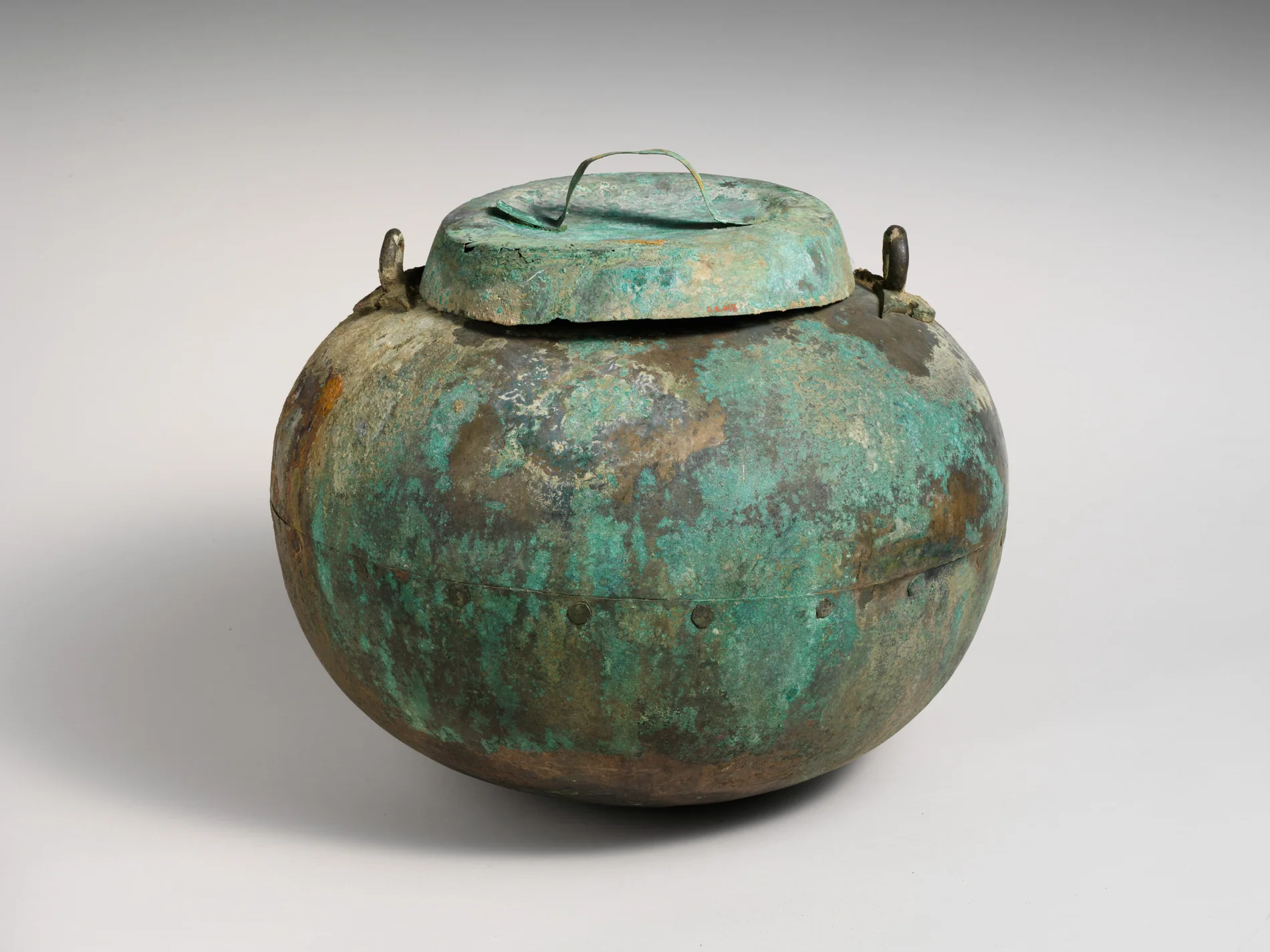
Cleaning an inherited object feels like the responsible thing to do. A tarnished candlestick, a dusty painting, and a coin album full of dull, unevenly colored coins all read as neglected, and tidying them up looks like basic care. In nearly every case, that instinct is backwards. Cleaning is one of the few actions in the first weeks after inheriting a collection that cannot be undone, and what looks like grime or wear to an untrained eye is very often the object's own surface, its patina, its original finish, or evidence of its age and history, all of which a cleaning attempt removes permanently along with whatever dirt came with it. This is not a single rule but four different ones, because coins, silver, paintings, and paper each fail in a different way under a well-meant cleaning, and treating them the same way is exactly how damage happens.
Coins
Never clean, polish, dip, or rub a coin, including with a soft cloth, a cotton swab, or a jewelry cleaning solution intended for silver or gold. What looks like tarnish on an old coin is usually toning, a thin natural layer that forms on the metal's surface over decades and is itself something collectors and numismatists specifically look for and value; removing it does not reveal a cleaner coin underneath, it strips away decades of surface history and leaves the coin visibly, permanently altered. Even a light polish leaves microscopic hairline scratches across the surface that are invisible to the naked eye but immediately obvious under the kind of magnification any serious buyer or grading service will use, and a coin with cleaning marks is generally worth substantially less than the same coin left alone, regardless of how much tarnish it had beforehand. If a coin has active, sticky residue from an old adhesive or a spill, the safest step is to isolate it in an acid-free coin flip or envelope and leave the residue itself for a specialist to assess, rather than attempting to remove it directly.
Silver
Heavy tarnish on silver looks worse than it is, and a metal polish or a commercial silver dip is far more aggressive than most people realize. Abrasive polishing removes a thin layer of the silver's actual surface with every pass, which over years of repeated cleaning gradually wears down engraved decoration, softens maker's marks and hallmarks until they become difficult to read, and on silver-plated pieces can eventually wear through to the base metal underneath, exposing a visible seam of a different color. Some tarnish is worth leaving entirely alone, particularly in the recessed detail of an ornate pattern, where a slightly darker tone in the crevices actually helps the design read more clearly by contrast, a look conservators deliberately preserve rather than remove. If a piece of silver needs handling at all before it can be properly assessed, wearing cotton gloves to prevent new fingerprint tarnishing and storing it somewhere dry is a safer intervention than any cleaning product.
Paintings
Never wipe a painting's surface with water, saliva, a household cleaner, or any cloth beyond the lightest possible dusting with a soft, dry brush well clear of the paint itself. A yellowed or discolored varnish layer is extremely common on older paintings and is not the same thing as dirt; removing it requires identifying the specific varnish and paint materials involved and using solvents calibrated to dissolve one layer without touching the other, a process that goes wrong quickly in untrained hands and can strip original paint along with the varnish. Flaking, cupping, or lifting paint should never be touched, pressed flat, or covered with tape in an attempt to hold it in place, since paint in that condition is actively unstable and any physical contact risks losing fragments permanently. If a painting is behind glass, the glass itself can be gently dusted on the outside, but the frame should not be opened or separated from the canvas without someone experienced in doing so, since backing materials and old fasteners are often more fragile than they look.
Paper and Ephemera
Documents, letters, photographs, and other paper ephemera are frequently the most fragile material in an entire collection, and the most likely to be damaged by ordinary handling rather than any deliberate cleaning attempt. Never use tape, glue, or a laminating sheet to repair a tear or reinforce a fold, no matter how gentle the product claims to be; most adhesives yellow, become brittle, or chemically interact with old paper in ways that cause worse damage over time and are extremely difficult for a conservator to reverse later. Do not attempt to force a folded document flat, since old paper creases become genuinely brittle along the fold line and can crack or tear if straightened without humidification, a controlled process that requires specific equipment. Avoid erasers, adhesive removers, and any cleaning product on paper entirely, and keep everything away from direct sunlight and high humidity, both of which accelerate the same yellowing and brittleness that handling can cause. Archival, acid-free sleeves or folders are a safe, reversible way to protect paper in the meantime, and require no contact with the document's surface at all.
The Common Thread
Across all four materials, the same underlying pattern holds. Cleaning is nearly always irreversible, while leaving an object alone costs nothing and closes off no future option. Whether a collection is eventually kept in the family, donated, appraised, or sold, an untouched object gives a specialist the most accurate picture of what it actually is, and that picture is worth more than a superficially tidier appearance. A coin collection in particular is one of the most common places this mistake happens, and what to do first with an inherited coin collection covers the fuller first-steps process for that specific material. For the rest of a mixed estate, the same instinct applies everywhere: when in doubt, do nothing, and let Estate Collections walk through what comes next once everything has been left exactly as it was found.